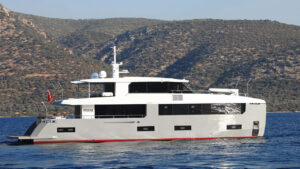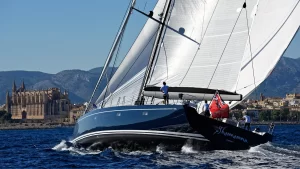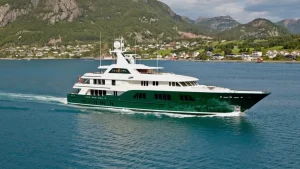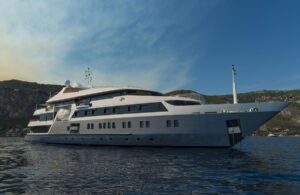

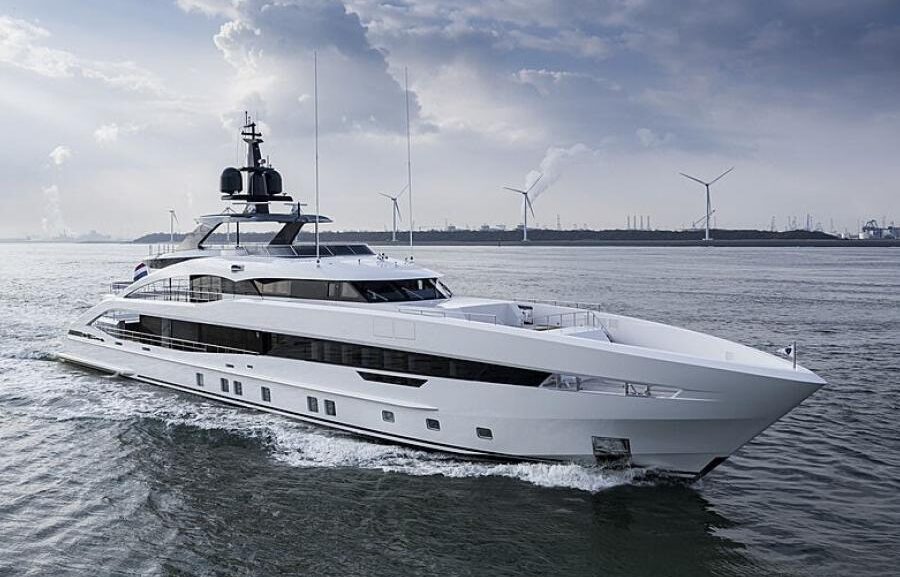
When most people admire a luxury superyacht, their attention naturally focuses on elegant exterior styling, expansive beach clubs, infinity pools, and luxurious interiors. Yet beneath the waterline lies the most important component of every vessel: its hull. Advanced hydrodynamic hull design determines how efficiently a yacht moves through the water, directly influencing fuel consumption, cruising comfort, speed, stability, and overall operational performance.
Modern naval architecture combines decades of engineering experience with computational fluid dynamics (CFD), artificial intelligence, tank testing, and advanced materials to create hull forms that maximize efficiency while minimizing environmental impact. As fuel efficiency and sustainability become increasingly important, hull optimization has become one of the defining factors in next-generation superyacht construction.
What Is Hydrodynamic Hull Design?
Hydrodynamic hull design is the science of shaping a vessel’s underwater structure to minimize resistance while maximizing stability and performance. Every curve, angle, chine, keel, and appendage influences how water flows around the yacht.
Naval architects spend thousands of engineering hours optimizing hull geometry to achieve the ideal balance between speed, fuel efficiency, seaworthiness, onboard comfort, and maneuverability.
The result is a yacht that requires less engine power to travel farther while delivering a smoother cruising experience in varying sea conditions.
Why Hull Design Matters
The hull is responsible for nearly every performance characteristic of a yacht. Even relatively small improvements in hull efficiency can generate significant reductions in fuel consumption throughout the vessel’s operational life.
Benefits of optimized hull design include:
- Lower fuel consumption
- Higher cruising efficiency
- Reduced engine workload
- Greater onboard comfort
- Improved stability
- Longer cruising range
- Lower emissions
- Reduced maintenance costs
For owners who regularly cruise thousands of nautical miles each year, these improvements translate into substantial operational savings.
The Science Behind Water Resistance
Water is nearly 800 times denser than air, meaning vessels must overcome significant resistance while moving through the ocean. Naval architects classify resistance into several categories, including frictional resistance, wave-making resistance, pressure drag, and aerodynamic drag.
Reducing these forms of resistance allows yachts to achieve higher speeds with lower engine output. This principle sits at the core of modern hydrodynamic engineering.
Computational Fluid Dynamics (CFD)
Computational Fluid Dynamics has revolutionized yacht design over the past two decades. Using advanced computer simulations, engineers can visualize water flow around a hull before construction even begins.
CFD allows designers to identify turbulence, pressure zones, wake formation, and inefficient flow patterns. Hundreds of virtual hull variations can be tested digitally before selecting the optimal configuration.
This technology dramatically reduces development costs while improving overall vessel performance.
Tank Testing and Real-World Validation
Although digital simulations provide remarkable accuracy, physical model testing remains an essential step in the design process. Scale models are tested in specialized towing tanks that replicate real ocean conditions.
Engineers evaluate:
- Wave generation
- Hull resistance
- Turning performance
- Pitch and roll behavior
- Wake characteristics
- Propeller efficiency
The combination of CFD analysis and physical testing ensures exceptional engineering precision before construction begins.
Displacement Hulls
Most large superyachts utilize displacement hulls. These vessels move through the water rather than riding on top of it, providing exceptional comfort, stability, and long-range cruising capabilities.
Advantages include:
- Excellent fuel efficiency at cruising speeds
- Superior ocean-crossing capability
- Smooth motion in rough seas
- Large interior volume
- Lower mechanical stress
Displacement hulls are particularly popular among explorer yachts and long-range expedition vessels.
Semi-Displacement Hulls
Semi-displacement hulls combine characteristics of traditional displacement vessels with higher-speed performance.
This hybrid approach provides:
- Improved cruising speed
- Good fuel economy
- Enhanced comfort
- Greater operational flexibility
Many modern superyachts between 30 and 60 meters adopt this versatile hull form.
Planing Hulls
Planing hulls are commonly found on sport yachts and performance-focused luxury vessels. As speed increases, these hulls rise partially above the water’s surface, dramatically reducing drag.
Benefits include:
- High maximum speed
- Rapid acceleration
- Sportier handling
- Lower resistance at high speeds
However, they generally consume more fuel during extended cruising compared to displacement designs.
Modern Bow Designs
Bow geometry has evolved significantly in recent years. Traditional raked bows are increasingly replaced by vertical plumb bows and axe bows.
Advantages include:
- Longer effective waterline
- Reduced pitching motion
- Improved fuel efficiency
- Greater interior volume
- Enhanced passenger comfort
Many award-winning superyachts now feature these modern bow profiles.
Hull Coatings and Surface Technology
Hydrodynamic performance depends not only on hull shape but also on surface condition. Advanced silicone-based coatings reduce friction while preventing marine growth.
Benefits include:
- Reduced drag
- Lower fuel consumption
- Improved cruising speed
- Reduced maintenance intervals
- Environmentally friendly antifouling protection
Stabilization Systems
Modern hulls work together with advanced stabilizer systems to improve onboard comfort. Today’s superyachts commonly utilize:
- Fin stabilizers
- Gyroscopic stabilizers
- Dynamic positioning systems
- Active trim control
These technologies reduce roll motion, improving guest comfort whether cruising or anchored.
Fuel Efficiency Through Hull Optimization
Fuel costs represent one of the largest operational expenses for any superyacht. Hydrodynamic optimization allows vessels to travel farther while consuming less fuel.
Key efficiency improvements include:
- Optimized propeller tunnels
- Efficient shaft angles
- Reduced wake turbulence
- Streamlined appendages
- Balanced weight distribution
Combined, these enhancements can reduce annual fuel consumption by a significant margin while lowering emissions.
The Role of Sustainability
Sustainability has become a major driver of hull innovation. Efficient hulls require less propulsion power, reducing greenhouse gas emissions and improving environmental performance.
When combined with hybrid propulsion systems, intelligent energy management, and renewable power generation, optimized hulls contribute substantially to greener yachting.
Future Trends in Hull Engineering
Emerging technologies continue pushing the boundaries of yacht performance. Future developments include:
- Artificial intelligence-assisted hull optimization
- Hydrogen-powered vessel integration
- Carbon fiber structural components
- Adaptive hull surfaces
- Digital twin engineering
- Advanced recyclable composite materials
These innovations promise even greater efficiency and sustainability for the next generation of luxury yachts.
Frequently Asked Questions
What is hydrodynamic hull design?
Hydrodynamic hull design is the engineering process of shaping a yacht’s underwater structure to reduce resistance, improve stability, and maximize fuel efficiency.
Does hull design affect fuel consumption?
Yes. A more efficient hull requires less engine power, significantly reducing fuel consumption and operating costs.
Which hull type is best for long-distance cruising?
Displacement hulls are generally considered the best choice for long-range cruising because they offer exceptional stability, comfort, and fuel efficiency.
Can older yachts benefit from hull optimization?
Yes. During a professional refit, hull coatings, appendages, stabilizers, and propulsion systems can often be upgraded to improve efficiency and performance.
Conclusion
Hydrodynamic hull design is the invisible foundation of every successful superyacht. While luxurious interiors and elegant styling capture attention, it is the engineering beneath the waterline that ultimately determines efficiency, comfort, safety, and performance.
Through advanced naval architecture, computational modeling, sustainable technologies, and continuous innovation, modern yacht builders are creating vessels capable of traveling farther, consuming less fuel, and delivering an exceptional onboard experience. As environmental responsibility and technological advancement continue shaping the industry, optimized hull design will remain one of the most valuable investments in the future of luxury yachting.